Start your Investment Journey
with Embassy REIT Today and Take Part in India’s Growing Office Real Estate Market!
Embassy REIT Overview
Introduction to REITs
What is a REIT?
Real Estate Investment Trusts (REIT) are vehicles that own or operate primarily income generating real estate , allowing investors to earn a share of income produced without directly buying the properties.
Why Invest in Indian REITs
REITs are a ‘Total Return Product’ that typically offer visibility on distributions along with long term capital appreciation. They are liquid, allow investors to invest and trade in small amounts, and represent ownership in a real estate vehicle, while leaving the management to professionals.
Indian REIT Landscape
There are 5 REITs listed in India currently – Embassy REIT, Mindspace REIT, Brookfield India Real Estate Trust, Nexus Select Trust and Knowledge Realty Trust (in the order of listing).
Start your REIT Investment Journey
Embassy REIT’s units are listed on the Indian stock exchanges NSE and BSE and can be bought or sold through a regular demat
account. An investor can buy or sell a single unit at a time.
Key Metrics to Consider
How are REIT Returns Taxed?
REIT distributions are tax-efficient, with a significant proportion tax free for investors.
Dividend Income
Interest Income
Amortization of SPV Debt3
Capital Gains4
- There is no further tax on dividends in the hands of the unitholders, as the SPVs of the REIT have not opted for the beneficial corporate tax rate regime.
- Withholding tax deducted by the REIT (Non-residents – 5%, Others – 10%)
- Not taxable upon receipt, however such proceeds need to be reduced from the cost of acquisition of the units
- Assuming on-market sale – LTCG at 12.5% (for holding period >1 year) or STCG at 20%, subject to taxability under applicable DTAA for non-residents.
Investor resources



Disclaimer: This is not an offer, invitation or recommendation to invest in units or other securities in India or outside India. No assurance or guarantee of returns or trading price of units is made. This material has not been certified or endorsed by any regulatory authority and the distribution of this material in certain jurisdictions may be restricted by law. REIT investments are subject to market risks. Potential investors should seek independent advice prior to investing, and should conduct their own analysis and form their own view of the market position, business and performance of Embassy Office Parks REIT.
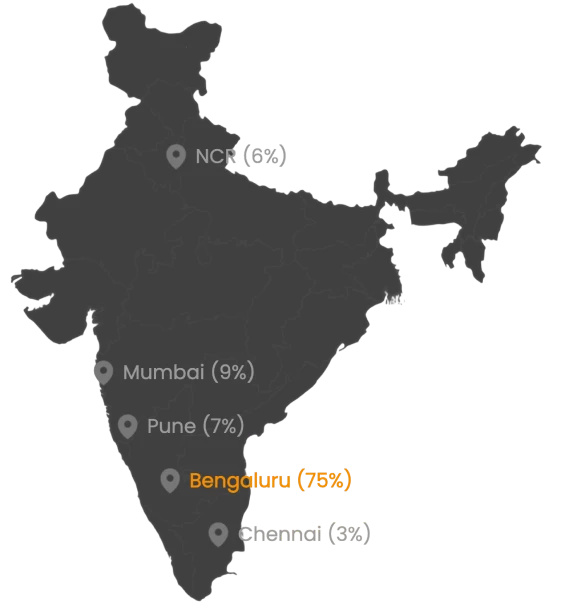
Our portfolio
Hilton Garden Inn at Embassy TechVillage
Embassy Energy
Embassy Business Hub
Four Seasons
Embassy GolfLinks Business Park
Embassy One
Embassy TechVillage
Hilton at Embassy GolfLinks
Hilton Hotels, Embassy Manyata Bengaluru
Embassy Manyata Business Park
Embassy Splendid TechZone
Embassy 247
First International Finance Center
Embassy Express Towers
Embassy Oxygen
Embassy Galaxy
Embassy Qubix
Embassy TechZone
Embassy Quadron
Top Occupiers









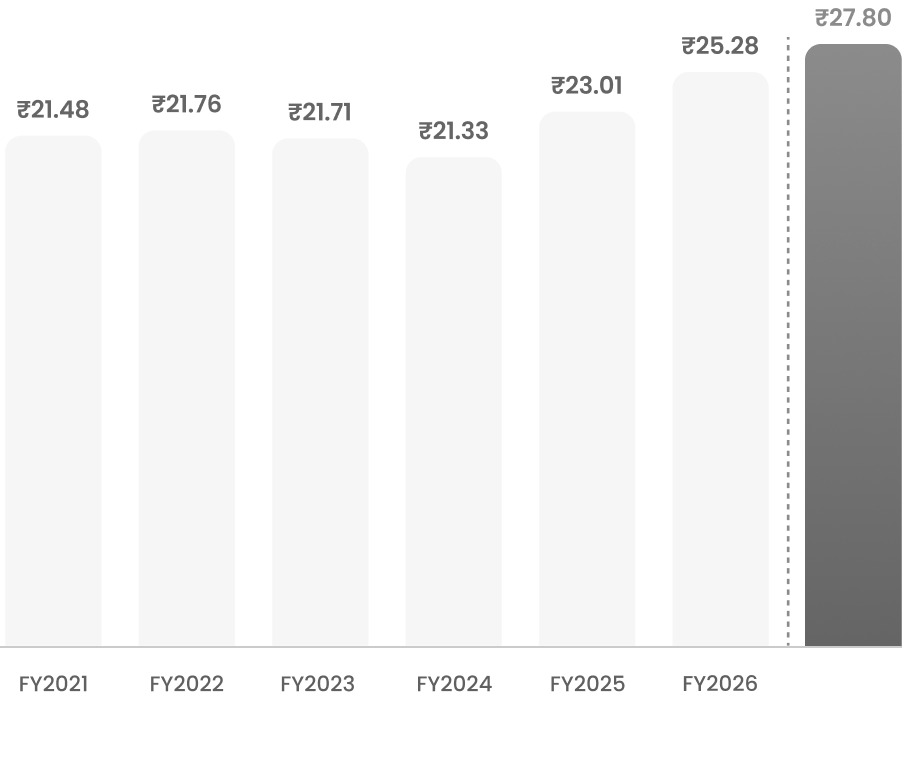
Our historical Returns
Stable and consistent distribution since listing
Note
Attractive Post Tax Yield Coupled with Capital Appreciation
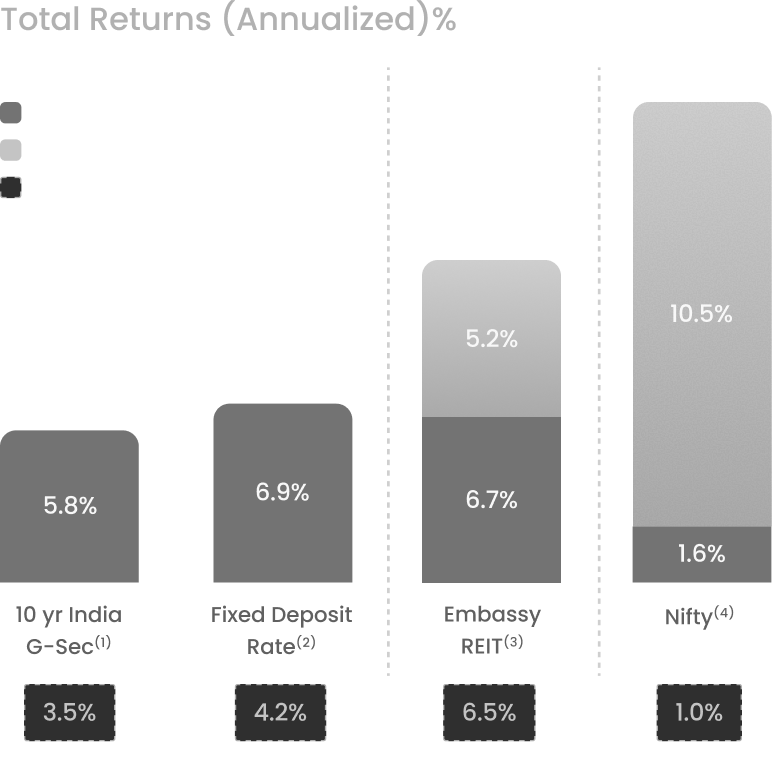
Notes: Source: Bloomberg, SBI, AMFI
1) Refers to the Indian 10-year G-Sec yield on April 01, 2019
2) Refers to SBI bank domestic term deposit rate for 5-10 years (for less than ₹2 crores) as on April 01, 2019
3) Performance is calculated basis XIRR. Distribution yield and capital appreciation computed 2019, total distributions paid out since listing on April 01, 2019, IPO price of ₹300 and NSE closing price as of August 21, 2026. Post tax distribution yield is calculated assuming 39% tax rate and interest component of the distribution which is taxable (considering Q1FY2027 distribution split where interest component is 6%)
4) Nifty – Annualized returns since Embassy REIT listing on April 01, 2019 to August 21, 2026
5) Tax rate of 39% (Maximum Marginal Tax Rate) considered for calculating all post tax distribution yields
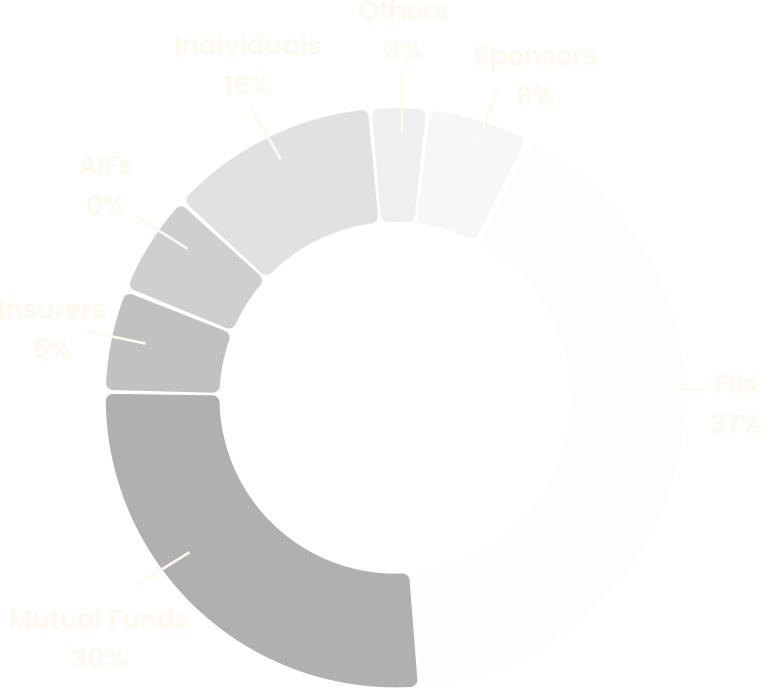
Well-diversified Investor Base
Note
FIIs
Bain Capital, The Vanguard Group, BlackRock, JP Morgan AM, Carmignac
DIIs
PPFAS Mutual Fund, ICICI Prudential Mutual Fund, HDFC Mutual Fund, SBI Mutual Fund
AIFs
Kotak Real Estate Fund
What is REIT?
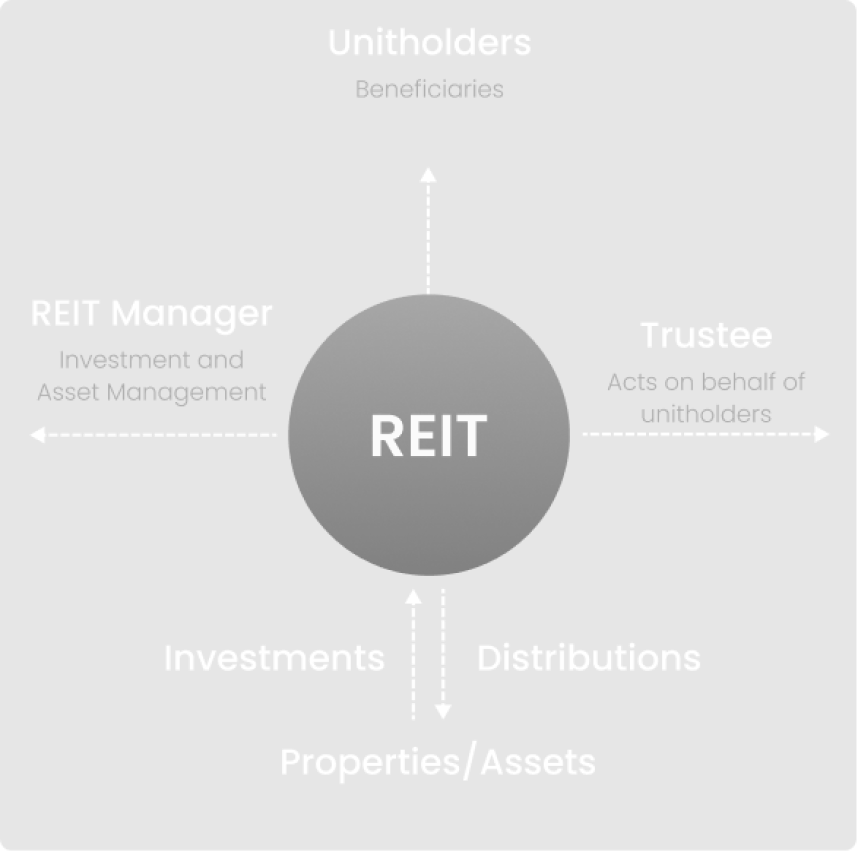
Note
REIT’s sponsor(s) is/are responsible to set up the REIT and appoint a trustee and a manager.
Please add this as a footnote under the structure
What is REIT?
Professional management
Liquidity
Corporate governance
Requirements
Growth
Deversification
Indian REIT Landscape
Disclaimer
Disclaimer: The taxability of REIT distributions differs across investor categories and hence we request all the investors to contact their respective financial / tax advisor(s) for the tax positions to be adopted by them with regard to the REIT distributions. In general, Indian REIT distributions are classified as (i) dividend, or (ii) interest, or (iii) amortization of debt received from the Special Purpose Vehicles (“SPVs”) or (iv) other income or (v) a combination of the above.
- Amount of income in the nature of dividend – Dividend income is not taxable in the hands of the unitholders as per Section 10(23FD) read with Section 115UA of the Income-tax Act, 1961 if the SPVs of the REIT have not opted for the lower corporate tax regime under section 115BAA of the Act. No tax is deductible on this portion of distribution.
- Amount of income in the nature of interest – Interest income is taxable in the hands of the unitholders. Please note that tax is deductible at applicable rates under Section 194LBA of the Income-tax Act, 1961.
- Proceeds from amortization of debt received from SPVs of the REIT – SPV loan amortization refers to repayment of loans by SPVs to the REIT. Please note that this is a repayment of debt extended by REIT to the SPVs. In case where aggregate sum of such “amortisation of SPV debt” component exceeds issue price of the unit, the same is taxed in the hands of the unitholders as “specified sum” under the head income from other sources as per the provisions of Section 56(2)(xii) of the Income-tax Act, 1961. The tax withholding provisions are applicable only to non-residents under section 195 of the Income-tax Act, 1961 and get triggered only once the aggregate of the sum received as “amortisation of debt” exceeds the issue price.
- Further, in computing capital gains on the sale of units of a REIT, the cost of acquisition of such units shall be reduced by distribution received by a unitholder in the form of amortization of debt, which is not subject to tax under section 56(2)(xii) of the Act, i.e., such portion which does not qualify as “specified sum” under the provisions of section 56(2)(xii) of the Act.
- Other income – Other Income refers to the interest income earned by the REIT on fixed deposits, income earned on sale of mutual funds etc. The Indian REIT pays taxes on such income and this income is exempt in the hands of the unitholders under section 10(23FD) of the Income-tax Act, 1961 and consequently, no tax is deductible on such income.
Key Metrics To Consider
- Price to Net Asset Value (NAV) – A REIT’s NAV indicates an independent valuation of its underlying real estate assets. Price to NAV ratio gives an indication of whether the REIT is trading a premium or a discount with respect to its intrinsic value
- Quality and track record of management, portfolio and financials – A strong management team displays a good track record of creating value for the unitholders. This may be demonstrated by a growing DPU, a growing NAV or a combination of the two
- Occupancy rate – Higher occupancy rates in the portfolio indicate greater assurance of rental income flows from the portfolio assets
- Tenant mix – A good mix of tenants from a diverse range of industries and sectors, along with the creditworthiness of the tenants, reduces concentration risk
- Weighted Average Lease Expiry (WALE) – REITs with longer WALEs face a lower risk of vacancy. However, it is possible that such REITs may not be able to negotiate for higher rents when market rents increase
- Lease expiry profile – A well-staggered lease expiry profile will minimize the number of leases that are due to expire in any given year, thereby reducing vacancy risks
- Leverage (Gearing) ratio – This ratio indicates REIT’s net debt to total enterprise value and is capped at 49% by SEBI regulations
- Debt expiry profile – A well-staggered debt expiry profile will reduce debt refinancing risks for the REIT which may otherwise impact the REIT’s cash flows
- Interest cost – A lower weighted average interest cost will improve the flowthrough from revenue to distributions